The pioneering journalist, organizer and feminist leader, who died at 92, spent more than six decades helping move women’s equality from the margins of public debate into the center of political and social life.
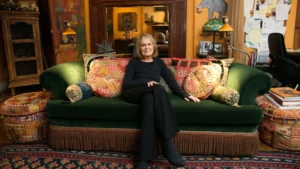
Gloria Steinem, the journalist and organizer who became one of the defining voices of the modern women’s movement, died on September 2 at her home in New York City. She was 92.
For more than six decades, Steinem helped push women’s equality, reproductive rights and political representation from the margins of public debate into the mainstream, while building institutions that helped sustain those causes across generations.
Her death was announced by Gloria’s Foundation.
Steinem’s contribution was not simply to argue for change. It was to help create the platforms, organizations and networks through which change could endure.
From journalism to institution building
Gloria Steinem first gained national attention as a journalist, including through her 1963 undercover investigation into conditions faced by women working as Playboy Club “Bunnies.”
She later helped create Ms. magazine in 1971, initially launched as an insert in New York magazine before becoming a standalone publication in 1972. It became one of the most influential platforms for feminist journalism in the United States.
Gloria Steinem also helped establish organizations including the National Women’s Political Caucus and the Ms. Foundation for Women, giving the broader movement institutions capable of developing leaders, supporting advocacy and sustaining political engagement.
That combination of journalism, organizing and institution building became central to her work. She understood that changing public attitudes mattered, but that lasting progress also required changing who participated in institutions and who exercised power within them.
A movement with global reach
Although Steinem became synonymous with the American women’s movement of the 1960s and 1970s, her outlook was increasingly international.
Her early years in India, where she spent time as a fellow after college, exposed her to grassroots activism and political organizing that would influence her later work. Over the decades, she traveled extensively and connected women’s rights with broader struggles involving poverty, racism, violence, political exclusion and economic inequality.
At the United Nations, Steinem connected the status of women with wider questions of peace, security and social stability.
Speaking at UN Headquarters in 2016, she addressed violence against women and argued that the treatment of women was closely linked to the broader health and peacefulness of societies.
That principle is now reflected across the international development agenda. Gender equality is embedded throughout the Sustainable Development Goals, while women’s participation is increasingly recognized as important to economic growth, governance, peacebuilding and sustainable development.
Gloria Steinem was not the architect of that global framework, but she belonged to a generation of activists and thinkers who helped create the political and cultural conditions in which equality became an international priority.
Progress, unfinished
Her death comes at a moment when many of the causes she championed remain contested.
Women’s participation has expanded substantially across politics, business, journalism, academia and other areas of public life during Steinem’s lifetime. Yet gender-based violence remains widespread, women continue to be underrepresented in many positions of power, and reproductive rights remain the subject of intense political debate in the United States and around the world.
Gloria Steinem rarely treated progress as inevitable.
Her work reflected a belief that social gains depended on continued participation, organization and vigilance, and that movements were strongest when they became larger than any single personality.
That conviction defined much of her public life. Steinem consistently resisted attempts to cast herself as the sole leader of feminism, instead emphasizing the contributions of organizers, writers, civil rights leaders and countless women whose work never attracted the same public recognition.
Even late in life, she continued engaging younger generations of activists and using her New York home as a place for organizing and discussion.
A life measured in changed possibilities
In 2013, President Barack Obama awarded Steinem the Presidential Medal of Freedom, describing her as a trailblazing writer and feminist organizer who had advanced political and social change in the United States and abroad.
Yet her larger legacy may be visible in something harder to quantify: the range of possibilities available to the generations of women who followed.
The transformation of women’s participation in politics, journalism, business, academia and public life was never the achievement of one individual. Steinem herself repeatedly made that point. But few figures were as effective at translating the demands of the women’s movement into a language that institutions, governments and the wider public could no longer ignore.
Gloria Steinem spent her life arguing that equality was not simply a women’s issue. It was a question of how societies distribute dignity, opportunity and power.
The work she championed remains unfinished, but the world confronting it is profoundly different from the one in which she began. Women now lead governments, institutions, companies and movements in ways that were far less imaginable when Steinem entered public life, while new generations continue to expand the boundaries of equality she spent decades pushing forward.
That may be the clearest measure of her legacy: not that she completed the struggle, but that she helped ensure it would continue with more voices, more power and more possibility than before.
Her life demonstrated that lasting change is built across generations. The movement continues, carried forward by millions whose opportunities are wider because Gloria Steinem helped widen them.
Gloria Steinem, 1934–2026.
 Follow SDG News on LinkedIn