Candidates seeking to become the next UN Secretary-General will appear together in New York on Thursday, offering the public a rare opportunity to compare their competing visions for an institution facing conflict, financial pressure and deepening geopolitical division.
The candidates seeking to become the next Secretary-General of the United Nations will take part in a globally broadcast town hall on Thursday, July 23, placing the leadership contest before an international audience at a consequential moment for the multilateral system.
The 90-minute event will begin at 5 p.m. in New York—11 p.m. in Central Europe—and will be held in the General Assembly Hall at UN Headquarters. Convened by the President of the General Assembly, the town hall will bring groups of candidates together for discussion rather than presenting them separately, as occurred during the formal interactive dialogues conducted earlier in the selection process.
Civil society representatives and other stakeholders have been invited to participate and submit questions, although only a limited number will be selected. The event will also be broadcast internationally.
A Leadership Decision With Global Consequences
The next Secretary-General will assume office on January 1, 2027, succeeding António Guterres after the conclusion of his second five-year term.
The successful candidate will inherit an organization confronting wars involving major powers and their allies, pressure on the international humanitarian system, widening development financing gaps, accelerating climate risks and increasingly strained relations among members of the Security Council.
The contest is therefore about more than the leadership of the UN Secretariat. It will help determine how forcefully the United Nations can defend international law, mobilize responses to global crises and preserve cooperation among governments whose strategic interests are becoming harder to reconcile.
Candidates have used earlier public appearances to emphasize institutional reform, diplomatic mediation, development financing, climate action and the need to rebuild confidence in multilateral institutions. Thursday’s discussion will provide a more direct opportunity to examine where their approaches differ—and how they intend to translate broad commitments into action.
An Increasingly Public Selection Process
For much of the United Nations’ history, the selection of its Secretary-General was largely conducted behind closed doors. That began to change during the 2016 contest, when candidates participated in public General Assembly hearings and submitted formal vision statements.
The 2026 process has continued that movement toward greater transparency. Candidates have already faced individual questioning from UN member states, while public events in Geneva and elsewhere have expanded scrutiny beyond the Security Council and General Assembly.
The July 23 town hall represents another significant step: candidates will be placed alongside one another before diplomats, civil society and a worldwide audience.
The increased openness does not, however, alter the decisive role of the Security Council. Under the UN Charter, the 15-member Council recommends one candidate to the 193-member General Assembly, which formally makes the appointment. Any of the Council’s five permanent members—China, France, Russia, the United Kingdom and the United States—can effectively block a candidate.
That structure means the eventual choice will depend not only on experience and public performance, but also on whether a candidate can secure acceptance across increasingly divided geopolitical blocs.
A Diverse and Competitive Field
The contest has drawn former heads of state, senior diplomats and leaders of major international institutions from Latin America, the Caribbean and Africa.
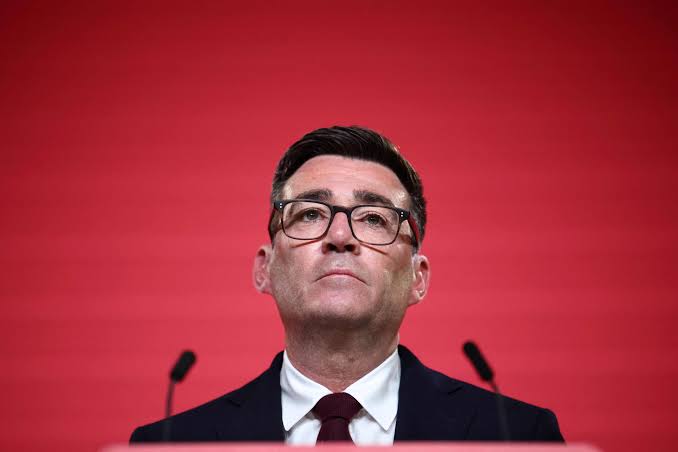
Among the prominent contenders are former Chilean President and former UN human rights chief Michelle Bachelet; International Atomic Energy Agency Director General Rafael Mariano Grossi of Argentina; UN Trade and Development Secretary-General Rebeca Grynspan of Costa Rica; former UN General Assembly President María Fernanda Espinosa of Ecuador; Guyanese diplomat Carolyn Rodrigues-Birkett; and former Senegalese President Macky Sall.
The precise composition of the field has continued to evolve as governments nominate candidates, adjust their support and conduct diplomatic outreach. Senegalese President Bassirou Diomaye Faye formally endorsed Sall’s candidacy this week, describing it as a national bid “in the service of Africa,” despite political tensions between the current and former administrations.
The race has also renewed calls for the United Nations to appoint its first woman Secretary-General. All nine people to have held the position since the organization’s founding in 1945 have been men. Several women with extensive national and international leadership experience are competing in the current field, making that possibility more tangible than in previous contests.
Representation, however, is only one dimension of the decision. Governments will also assess candidates’ independence, management experience, diplomatic relationships and ability to navigate the interests of the Security Council’s permanent members.
What to Watch During the Debate
The most revealing exchanges may concern what candidates believe the Secretary-General can realistically accomplish when the Security Council is divided.
The office carries substantial diplomatic visibility but limited independent authority. Its influence depends heavily on the Secretary-General’s ability to mediate discreetly, use public advocacy strategically, manage the UN system effectively and maintain working relationships with governments that frequently disagree.
Candidates may also face questions about proposed reforms to make the organization more efficient and financially sustainable. The UN has confronted severe liquidity pressures as some member states delay or withhold assessed contributions, while humanitarian and development agencies are being asked to respond to growing needs with constrained resources.
Other likely areas of scrutiny include reform of the Security Council and international financial architecture, the UN’s response to armed conflict, implementation of the Sustainable Development Goals, artificial intelligence governance, climate finance and the relationship between human rights advocacy and diplomatic engagement.
The debate may not produce a clear frontrunner. Security Council negotiations, regional alliances and private diplomatic calculations will remain central to the final outcome.
But Thursday’s event will give governments and the global public a clearer view of how those seeking the UN’s highest office understand the institution’s problems—and whether they possess a credible strategy for addressing them.
At a time when confidence in international cooperation is being tested, the selection of the next Secretary-General will serve as an early indication of what kind of United Nations member states are prepared to support: one primarily focused on managing institutional decline, or one equipped to restore a greater measure of authority, effectiveness and trust.
RELATED STORIES:
 Follow SDG News on LinkedIn