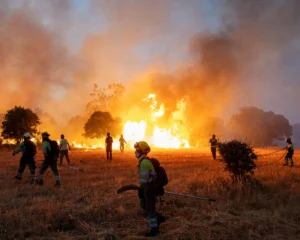
Europe is confronting one of the most severe heat emergencies in its modern history, as record-breaking temperatures sweep across the continent, overwhelming hospitals, disrupting transportation, closing schools, and forcing governments to activate the highest levels of emergency response. What was once considered an extraordinary weather event is increasingly becoming a defining governance challenge for the 21st century.
More than 150 million Europeans are experiencing temperatures above 35°C (95°F), with large areas of France, the United Kingdom, Belgium, Germany, Italy, Poland and the Balkans under red or high-level heat alerts. Britain has recorded its hottest June day on record for three consecutive days, while France experienced its hottest day ever measured. Temperatures above 40°C (104°F) have become widespread across western Europe, with even higher temperatures forecast for parts of central Europe in the coming days.
The impacts are cascading across society.
Hospitals throughout France have reported surging emergency admissions for heat-related illnesses. Ambulance services in parts of England have declared critical incidents following unprecedented demand. Schools have closed, rail services have been disrupted by heat-damaged infrastructure, cultural festivals have been cancelled, and governments are urging citizens—particularly older adults, children and those with chronic illnesses—to remain indoors during the hottest hours of the day. Authorities have also reported dozens of heat-related drowning deaths as residents sought relief in rivers, lakes and coastal waters.
The economic consequences are also mounting. Extreme heat is reducing productivity across construction, manufacturing, agriculture and other outdoor industries. Analysts warn that even a few days of temperatures at these levels can measurably reduce quarterly economic growth, while businesses face rising energy demand, infrastructure failures and increased worker safety risks.
A Warning for Governments
Scientists say the significance of this event extends well beyond this week’s temperatures.
A rapid attribution study by the World Weather Attribution concluded that the intensity of the current heatwave would have been virtually impossible without human-caused climate change driven by greenhouse gas emissions. Europe is warming approximately twice as fast as the global average, making the continent particularly vulnerable to increasingly frequent and intense heat extremes.
Researchers found that nearly half of Europe’s 850 largest cities have already broken—or are expected to break—records for dangerous heat stress, which combines temperature and humidity to measure how difficult it becomes for the human body to cool itself. Nighttime temperatures are also remaining unusually high, denying vulnerable populations the opportunity to recover from daytime heat exposure.
Beyond Climate: A Test of National Resilience
For government leaders, this heatwave underscores that climate resilience extends far beyond emissions reductions.
The resilience of healthcare systems, electricity grids, transportation networks, water supplies, urban planning and labor protections are all being tested simultaneously. Many European cities—designed for temperate climates rather than prolonged extreme heat—remain poorly adapted, with relatively low levels of residential air conditioning compared with other developed regions.
Experts increasingly argue that adaptation measures—including cooling centers, heat-resilient infrastructure, expanded urban tree cover, early warning systems, revised building standards and strengthened occupational heat protections—must now become core components of national security and economic planning alongside continued efforts to reduce emissions.
The New Normal?
Europe’s devastating 2003 heatwave, which claimed tens of thousands of lives, was once viewed as an extraordinary disaster. Scientists now warn that events of similar—or greater—intensity are becoming substantially more likely in today’s warmer climate, with extreme nighttime heat now estimated to be up to 100 times more likely than it was two decades ago.
As another weekend of potentially record-breaking temperatures approaches across central Europe, this week’s emergency serves as a stark reminder that climate change is no longer solely an environmental issue. It has become a defining challenge for public health, economic resilience, infrastructure planning and government preparedness—one that will increasingly shape policy decisions across Europe and around the world.
RELATED STORIES:
 Follow SDG News on LinkedIn