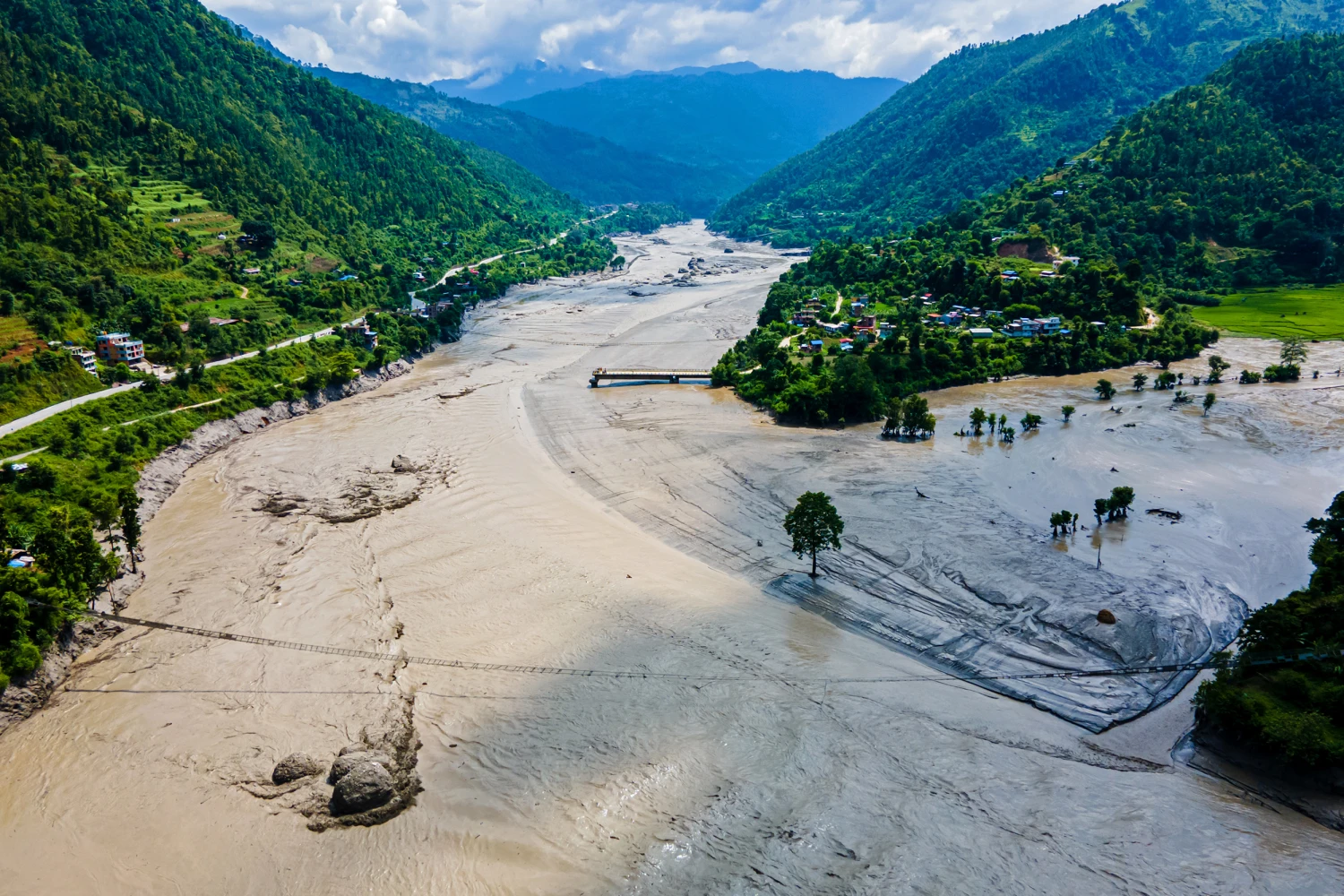
J.P. Morgan Asset Management has renamed Campbell Global, its longstanding forestry investment business, J.P. Morgan Natural Capital, marking one of Wall Street’s clearest moves yet to bring nature-based assets deeper into institutional portfolios.
The change, announced September 2, reflects an expansion beyond sustainable timberland toward opportunities across land, carbon, biodiversity and other nature-related investments. The platform manages more than 1.5 million acres globally and oversaw approximately $11 billion in assets under supervision as of the end of 2025.
The significance is less that natural capital investing is new than that one of the world’s largest asset managers is putting the J.P. Morgan name directly behind it.
From timberland to natural capital
J.P. Morgan acquired Campbell Global in 2021, adding more than four decades of timberland investment expertise to its alternatives platform.
Its Forest & Climate Solutions Fund II closed at $1.5 billion in 2025, while related separate-account mandates brought total capital raised for the strategy to $2.3 billion. J.P. Morgan Natural Capital is now part of the asset manager’s $326 billion alternatives business.
Forestry remains central, but the new name signals a broader thesis: natural assets can generate financial value while providing exposure to opportunities linked to carbon, biodiversity, conservation and ecosystem services.
“Our roots in sustainable forestry remain central to who we are, but our mandate has expanded to the broader role nature-based assets can play in creating long-term value for clients,” J.P. Morgan Natural Capital CEO Angie Davis said.
Nature moves closer to mainstream finance
The rebrand comes amid a broader reassessment of nature within global finance.
Nearly half of global GDP is linked to biodiversity and ecosystem services, underscoring the extent to which economic activity depends on functioning natural systems.
Investors are increasingly paying attention not only to environmental impacts, but also to financial exposure to ecosystem degradation, resource scarcity and nature-related risk. More than 50 investible nature-related opportunities across 13 sectors could contribute as much as $10.1 trillion in annual business revenues and cost savings by 2030.
That does not mean biodiversity itself has become a conventional asset class. Established assets such as forests, farmland and water infrastructure remain easier to finance because they have clearer cash flows and longer performance histories.
That makes forestry a potential bridge between conventional real assets and a broader natural-capital investment universe.
The financing gap remains enormous
Institutional interest still falls far short of the capital required to reverse nature loss.
Approximately $220 billion flowed into nature-based solutions in 2023, including just $23 billion from private finance. By comparison, roughly $7.3 trillion flowed into activities considered harmful to nature.
Annual investment in nature-based solutions needs to rise to approximately $571 billion by 2030 to meet global biodiversity, climate and land-restoration objectives.
Public finance alone will not close that gap. Scaling private capital will require stronger policy frameworks, credible revenue streams, reliable data, risk mitigation and clearer market structures.
A signal to governments
That makes J.P. Morgan’s move relevant well beyond Wall Street.
Governments with significant forests, fisheries and other natural assets could gain new avenues for attracting long-duration private capital. But doing so will depend on creating investment conditions that are credible enough for institutional investors while preserving environmental integrity.
By replacing Campbell Global with J.P. Morgan Natural Capital, one of global finance’s most recognizable brands is putting its institutional weight behind a market that has historically sat at the margins of mainstream investment.
From Wall Street to UNGA
That convergence of nature, policy and capital will move to the international stage later this month at the Nature Summit during the 81st United Nations General Assembly.
Held at United Nations Headquarters on September 24, the invitation-only gathering will bring together leaders from government, finance, industry and multilateral institutions under the theme “Building the Future of the Nature-Based Economy.” The Summit will be chaired by Prime Minister Lord Fatafehi Fakafānua of the Kingdom of Tonga.
The timing is notable.
J.P. Morgan’s rebrand shows that financial institutions are beginning to build larger platforms around natural assets. The next challenge is whether governments can create the policy, market and investment frameworks needed to channel that capital toward real economic and environmental outcomes.
As natural capital moves closer to mainstream finance, the central question is shifting from whether nature has economic value to how that value can be recognized, financed and translated into long-term prosperity at scale.
 Follow SDG News on LinkedIn