New alliances and a market rally shape the contest against President Lula, while congressional gains bring environmental policy and Indigenous rights into focus.
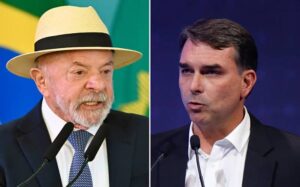
Senator Flávio Bolsonaro has secured support from two former presidential rivals as Brazil’s campaigns regroup for an October 25 runoff against President Luiz Inácio Lula da Silva.
Senator Flávio Bolsonaro received 47.03% of valid votes, compared with Lula’s 45.16%, a lead of 1.87 percentage points, according to Brazil’s Superior Electoral Court with 99.99% of voting machines tallied. Neither reached the majority required for an outright victory in the October 4 election.
Senator Flávio Bolsonaro, 45, surpassed polling expectations, which had generally placed the incumbent narrowly ahead. Lula, 80, is seeking a fourth nonconsecutive term. Their campaigns now turn to voters who backed eliminated candidates and millions who stayed home.
Rival Endorsements Strengthen Bolsonaro’s Campaign
Ronaldo Caiado and Romeu Zema have endorsed Senator Flávio Bolsonaro after receiving 2.18% and 0.27% of valid first-round votes, respectively. Two other candidates, Augusto Cury and Renan Santos, who received 2.89% and 2.24%, said they would support neither contender.
The endorsements give Bolsonaro additional political backing, although voters are free to make their own choices in the runoff.
Turnout is another priority. Approximately 33.4 million voters abstained, representing 21.08% of the electorate and the highest abstention rate in 28 years, according to the Associated Press. Lula’s campaign is reviewing regional turnout and reallocating resources, while Bolsonaro is working to consolidate alliances.
Congressional Gains Shape the Policy Outlook
The presidential contest follows substantial gains for Bolsonaro’s Liberal Party, whose Senate representation increased from 15 to 28 seats. Projections reported by Reuters put its lower-house representation at 121 seats, up from 98.
Lula’s Workers’ Party-led three-party bloc also gained ground, with a projected 88 lower-house seats, up from 82. The Workers’ Party retained nine Senate seats. These results will influence the next president’s ability to pass legislation, although coalition-building remains central to Brazil’s fragmented Congress.
Four other Bolsonaro family members won office: Michelle and Carlos Bolsonaro secured Senate seats, while Renato and Jair Renan Bolsonaro won lower-house seats.
Senator Flávio Bolsonaro has proposed amnesty for his father, former President Jair Bolsonaro, who was convicted of plotting a coup after his 2022 election defeat and sentenced to 27 years. He is serving the sentence under house arrest because of ill health. Any amnesty measure would face legislative and legal scrutiny.
The younger Bolsonaro also faces an unresolved investigation into funding received from banker Daniel Vorcaro for a film about his father. He acknowledges receiving the money but denies wrongdoing.
Markets Respond as Lula Weighs an Economic Reset
Investors responded strongly to the first-round outcome. Brazil’s Bovespa index rose 7.7% on October 5 to a record closing level of 206,911.89 points. Analysts cited expectations of fiscal restraint and business reforms under a possible Bolsonaro administration.
Lula, meanwhile, is considering appointing Vice President Geraldo Alckmin as finance minister if reelected, Reuters reported, citing two people familiar with the discussions. The proposal remains under consideration, and the presidency did not respond to a request for comment.
The potential appointment would signal an effort to reassure businesses and attract centrist voters as Lula seeks to close the electoral gap.
Indigenous Rights and Environmental Policy Draw Scrutiny
The congressional results have also prompted concern over the future of environmental protections. Amazon Watch and the Articulation of Indigenous Peoples of Brazil warned that gains by lawmakers supporting mining could weaken territorial protections, AP reported.
Flávio Bolsonaro has said economic activity on Indigenous lands would respect communities’ wishes and include environmental safeguards. His party did not respond to AP’s request for comment. The organizations’ warnings concern possible policy changes rather than measures already enacted.
Brazil’s environmental ministry has reported an approximately 50% reduction in the annual Amazon deforestation rate between 2022 and 2025. The next government and Congress will influence the continuation of enforcement policies and the regulation of economic activity on protected lands.
Relations With Washington Remain a Campaign Issue
The candidates also offer different approaches to Washington. Bolsonaro favors closer alignment with U.S. President Donald Trump, while Lula has emphasized Brazilian sovereignty and challenged U.S. pressure.
The Trump administration denies accusations that it is seeking to interfere in the election. Following the first-round vote, Trump praised Bolsonaro’s performance and predicted a close runoff.
With the presidency still undecided, the campaigns’ immediate challenge is to convert alliances and proposals into additional votes. The October 25 result will determine who leads Brazil, while the congressional balance will shape the scope for action on economic policy, environmental protection and institutional reform.