As global supply chains, energy systems and capital flows are reordered, Unstoppable Africa 2026 is advancing a sharper proposition: Africa’s next economic chapter will be defined not simply by growth, but by who owns, finances and captures its value.
NEW YORK — Africa no longer needs to make the case that it matters to the global economy. The more consequential question is who will capture the value created as its markets expand.
That question sits at the center of Unstoppable Africa 2026, the fifth edition of the Global Africa Business Initiative’s flagship gathering, which will bring African and global business leaders, heads of state, investors and policymakers to New York on September 20 and 21.
Convened by UN Secretary-General António Guterres and African Union Commission Chairperson Mahmoud Ali Youssouf, and organized and coordinated by the United Nations Global Compact, the forum will take place at the New York Marriott Marquis on the sidelines of the opening of the 81st session of the UN General Assembly. Its theme is “Powering Business, Scaling Economies, Shaping the Future.”
The framing reflects an evolution in the conversation around African economic development. Rather than focusing primarily on attracting investment into a continent rich in minerals, renewable resources, young consumers and entrepreneurial talent, this year’s agenda repeatedly returns to a more structural question: how much of the resulting value will be created, financed and retained in Africa?
GABI puts the issue plainly. The next decade, it argues, will determine not whether Africa grows, but who captures the value of that growth.
From extraction to ownership
That argument is clearest in the opening agenda block, “Trade at Scale: Owning Value, Shaping Markets.”
The program points to Africa’s dominance in critical-mineral supply while emphasizing how little downstream economic value is captured on the continent. According to figures cited in the draft agenda, Africa supplies 76 percent of the world’s cobalt and 60 percent of its manganese, yet captures less than 5 percent of global clean-energy manufacturing value and refines under 1 percent of most critical minerals it produces.
The underlying question is increasingly important as demand for minerals critical to batteries, electric vehicles and energy infrastructure grows: will Africa remain primarily a supplier of raw materials, or can resource wealth become the foundation for processing, manufacturing, logistics and industrial development?
The agenda calls for engagement frameworks capable of converting mineral-linked revenues and partnerships into processing plants, logistics corridors and other productive assets on African balance sheets.
That reflects the broader proposition running through Unstoppable Africa 2026: participation in global value chains is not enough if the highest-value portions of those chains continue to sit elsewhere.
Building the financial system to scale Africa
Ownership also shapes the event’s approach to capital.
A strategic dialogue titled “Building the System That Finances Africa at Scale” will examine how African banks, insurers, fintech companies and sovereign institutions can build financing vehicles, guarantees and market infrastructure capable of moving capital into productive investment.
The agenda frames the challenge as one of financial sovereignty: creating African-owned institutions with sufficient scale to mobilize and deploy capital rather than relying primarily on external validation or financing structures.
That emphasis is especially relevant in a period when emerging economies face elevated borrowing costs, constrained fiscal space and intense competition for global capital.
GABI describes the Unstoppable Africa 2026 forum as explicitly deal-focused and execution-driven, with sessions designed not simply to discuss investment but to catalyze transactions, develop investment vehicles and create cross-border partnerships.
One example is the next stage of the DRE Nigeria Fund, a $500 million decentralized renewable-energy vehicle involving the Nigeria Sovereign Investment Authority, Sustainable Energy for All, Africa50 and the International Solar Alliance.
The partnership was unveiled in March 2025 as the first country-focused fund under the wider DRE Africa Platform, with a mandate to finance distributed renewable-energy projects and mobilize private and domestic institutional capital.
The Unstoppable Africa agenda now places the initiative back on stage as it moves from development toward commercialization, illustrating the forum’s effort to connect public commitments with deployable capital. The agenda describes Nigeria as a pathway toward a model that could ultimately be replicated elsewhere on the continent.
Energy sovereignty becomes industrial strategy
A similar shift is visible in the energy conversation.
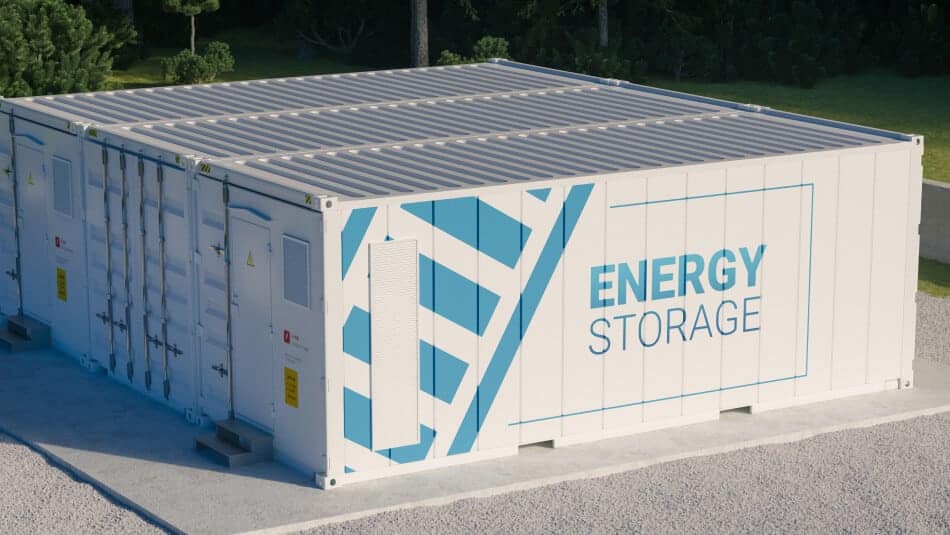
The program’s “Power Shift: Supercharging Africa’s Energy Sovereignty” session moves beyond energy access alone to consider how renewable power, storage, mini-grids and transmission can underpin industrial competitiveness.
Namibia is highlighted as one example, with the agenda pointing to efforts to encourage domestic mineral beneficiation and develop a green-hydrogen industry as part of a broader strategy to convert renewable resources into higher-value economic activity.
The distinction matters.
Reliable and affordable energy is not simply a development outcome. It influences where minerals are processed, factories are built, digital infrastructure is located and companies can compete.
In that sense, Africa’s energy transition is increasingly inseparable from its industrial strategy.
AfCFTA moves from agreement to operating system
The African Continental Free Trade Area provides another pillar of the agenda.
The World Bank has described the AfCFTA as encompassing a market of roughly 1.3 billion people and $3.4 trillion in combined GDP, while GABI argues that deeper integration could provide African firms with the scale needed to compete across regional and global markets.
But the 2026 program focuses less on the agreement’s promise than on its execution.
A working session on the AfCFTA asks what African businesses actually need for continental trade to function: rules of origin, interoperable standards, customs procedures, trade finance, tax harmonization and workable dispute-resolution mechanisms.
The agenda calls for companies to move from the “consultation room” into the “design studio,” helping shape the systems through which the agreement operates.
That is a critical distinction. A free-trade agreement creates opportunity, but businesses capture it only when goods, capital and services can move efficiently across borders.
For Africa, integration becomes transformational when companies can use it to achieve continental scale.
Who owns Africa’s digital future?
The ownership question extends directly into artificial intelligence.
A second-day “Panel of the Future” will examine how African developers, entrepreneurs, governments and infrastructure providers can become builders and owners of AI systems rather than simply consumers of technologies developed elsewhere.
The agenda identifies African data as a strategic asset and asks what “sovereign AI” could mean in practice, including models and infrastructure developed on African terms.
The economic logic resembles the debate over critical minerals.
Having the underlying resource, whether minerals, data or talent, does not necessarily mean capturing the economic value produced from it.
If Africa supplies data, users and technical talent while the platforms, intellectual property and infrastructure remain externally controlled, much of the upside can accrue elsewhere.
Unstoppable Africa’s digital agenda therefore increasingly frames technology not only as an adoption challenge, but as an ownership challenge.
Expanding the definition of investable Africa
The forum also broadens the sectors considered central to Africa’s economic transformation.
GABI’s five themes for 2026 are Energy, Digital Transformation, Trade, Creative Industries and Sport, supported through plenaries, investor discussions and more targeted working sessions.
That broader definition matters.
Sport and creative industries are often treated as cultural assets. Unstoppable Africa increasingly treats them as economic infrastructure capable of generating intellectual property, exports, investment and globally competitive African brands.
Former NBA All-Star Luol Deng, for example, is scheduled to discuss the investment case for sports infrastructure and the potential for professional sport to create wider commercial ecosystems across African markets. The event program links his experience developing basketball in South Sudan with a wider conversation about infrastructure as an investable frontier.
Creative industries receive similar treatment, with the agenda examining financing structures that allow African filmmakers and content producers to retain more ownership of intellectual property, distribution and long-term economic value.
Again, the connecting idea is not simply growth.
It is value retention.
From narrative change to balance-sheet change
Unstoppable Africa was created in part to change the way the continent is discussed in global business and policy circles.
The 2026 edition suggests that ambition is moving into a more demanding phase.
Narrative change matters. But ultimately, balance sheets matter more.
The test is whether Africa can turn its natural resources into industry, its fragmented markets into continental businesses, its renewable potential into productive power, its data into African-built technologies and its cultural influence into scalable companies.
That is why the most consequential word running through this year’s gathering may be ownership.
GABI’s own framing asks who sets the terms of trade, who controls capital flows and who builds, scales and retains value across supply chains.
Those questions arrive as supply chains are being reorganized, demand for critical minerals is rising, artificial intelligence is creating new centers of economic power and the energy transition is changing the geography of global industry.
Africa possesses many of the assets on which those transitions depend.
Unstoppable Africa 2026 is making the case that the next challenge is ensuring the continent owns more of what those assets ultimately create.
SDG News is an official media partner of Unstoppable Africa 2026.
 Follow SDG News on LinkedIn