With the Strait of Hormuz still severely disrupted, the Trump administration is intensifying Iran sanctions and wider economic pressure and warns countries that continue to support Tehran. The next phase could test U.S. relations with China and Gulf partners as much as Iran itself.
WASHINGTON / MUSCAT / TEHRAN — Nearly six months into the war with Iran, Washington is placing greater emphasis on economic coercion while maintaining substantial military pressure, including the U.S. blockade of Iranian ports.
Treasury Secretary Scott Bessent said the United States is preparing what he called the “toughest sanctions in history,” arguing that sanctions combined with the blockade could push Iran toward economic collapse. Details of the new measures are expected Monday.
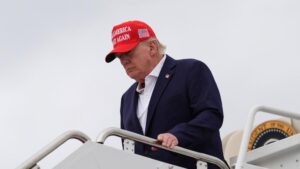
President Donald Trump has separately warned that countries whose banks, companies, airports or government institutions provide Iran with an economic “lifeline” could face severe consequences. That raises the prospect of expanded secondary sanctions targeting not only Tehran, but the international networks sustaining its economy.
Iran has denounced the measures as “economic terrorism” and “unjust sanctions.” China has rejected unilateral sanctions and continued to call for diplomacy.
The conflict is increasingly becoming a test of whether Washington can isolate Iran without straining relationships with the governments, banks and energy buyers needed to make that pressure effective.
Economic Pressure Moves to the Forefront
Iran sanctions have been in place for decades, and Tehran has built networks for moving oil, money and goods outside conventional Western financial channels. But war, sanctions and maritime restrictions are placing additional strain on those systems.
Iranian crude flows to China have fallen sharply from their 2025 peak, while some independent Chinese refiners are turning to Iraqi and Brazilian supplies.
That makes enforcement, rather than simply new sanctions announcements, the key variable.
China Becomes the Critical Test
China accounts for more than 80 percent of Iran’s shipped oil, making Beijing central to Tehran’s export revenues.
Its position also gives China economic leverage over Iran distinct from Washington’s military and financial pressure. Gulf governments have increasingly looked to Beijing to use that influence to help restore regional shipping.
Bessent is now urging China to cooperate with Washington, arguing that Beijing also benefits from reliable Gulf energy flows.
China therefore faces competing interests: protecting ties with Tehran, opposing U.S. secondary sanctions and securing the energy supplies on which its economy depends.
Any U.S. move against major Chinese refiners, banks or trading companies could also expand the confrontation into the wider U.S.-China economic relationship.
Oman Highlights Diverging Gulf Calculations
Washington’s strategy is also testing relationships across the Gulf.
Oman has spent months mediating between Washington and Tehran and discussing arrangements related to commercial navigation through Hormuz.
Trump this week threatened to “bomb Oman” if Muscat obstructed U.S. objectives, according to the Washington Post, an extraordinary warning toward a longstanding U.S. security partner and one of the region’s most important diplomatic intermediaries.
The dispute highlights a broader challenge. Saudi Arabia, Qatar, Oman and the UAE retain important security relationships with Washington while depending heavily on uninterrupted Gulf trade and regional stability.
Their interests do not always align with a strategy centered on maximum pressure against Tehran.
The UAE has announced plans to cut trade ties with Iran amid heightened tensions. Oman, meanwhile, remains one of the few regional actors with established channels to both Washington and Tehran, although Iran’s Revolutionary Guard has said reopening Hormuz does not depend on talks with Muscat.
Hormuz Remains the Strategic Center
The Strait of Hormuz continues to connect the military, diplomatic and economic dimensions of the war.
Before the conflict, roughly a quarter of global seaborne oil trade passed through the waterway. More than 110 billion cubic meters of LNG crossed the strait in 2025, close to one-fifth of global LNG trade.
Traffic remains far below pre-war levels.
The International Energy Agency estimates that Middle Eastern oil production in July remained about 8.3 million barrels per day below pre-conflict levels. Brent crude was trading around $93 a barrel Friday and heading for a second consecutive weekly gain.
Markets have nevertheless shown some resilience as producers and buyers adapt through alternative supplies, storage and routes that partially bypass Hormuz.
That resilience could weaken quickly if shipping disruptions intensify or the military conflict broadens.
What Governments Should Watch
Three issues now matter most.
First, the scope of secondary sanctions. Measures against major foreign banks, refiners or trading companies could force governments to choose more clearly between commercial relationships with Iran and access to the U.S. financial system.
Second, China’s response. Beijing’s willingness to reduce Iranian oil purchases or use its leverage with Tehran could materially affect Washington’s strategy.
Third, Gulf alignment. Oman’s mediation, the UAE’s trade decision and the broader hedging by regional governments will show whether Washington can sustain a coordinated pressure campaign.
Defense Outlook
The Iran war is entering a phase in which financial and economic pressure is becoming increasingly integrated with military strategy.
Washington is seeking to constrain Iran’s oil revenues, trade and access to international finance while maintaining the blockade and broader military pressure. Tehran is attempting to withstand those measures while retaining leverage through Hormuz and its remaining trading relationships.
The immediate test is no longer simply whether new sanctions are announced.
It is whether the United States can enforce them strongly enough to materially constrain Iran without weakening cooperation with China, Gulf partners and other governments whose participation will determine whether the strategy works.
RELATED STORIES:
 Follow SDG News on LinkedIn