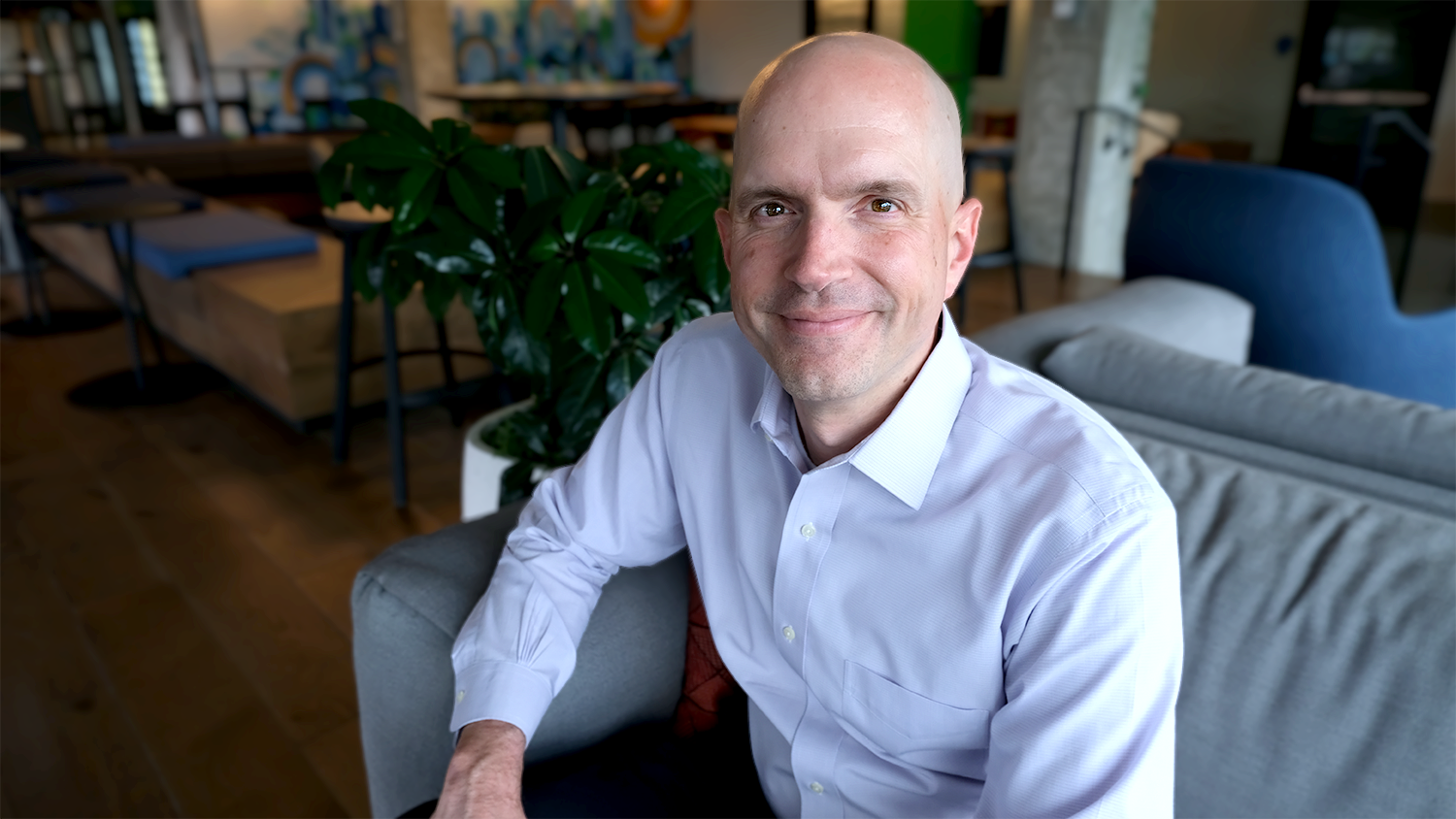
Lauri Sainiemi, Corporate Vice President, Quantum Fabrication, Microsoft
Lauri Sainiemi operates at one of the hardest points in quantum computing: turning fragile scientific breakthroughs into hardware that can be fabricated reliably and, eventually, at scale.
He has spent nearly 15 years at Microsoft. He now leads the company’s quantum fabrication organization and its quantum laboratories in Denmark. Microsoft describes its Lyngby facility as the company’s largest quantum site globally, placing Lauri Sainiemi at the center of one of its most ambitious hardware efforts.
His work is closely tied to Microsoft’s pursuit of topological quantum hardware. DTU has described Sainiemi as responsible for the development of the Majorana quantum chip. Microsoft says its expanded Lyngby facility can fabricate core elements of its Majorana-based topological quantum hardware in Denmark.
That makes his role fundamentally different from proving that a quantum effect is possible.
It is about making it reproducible.
The Distinction
Quantum hardware cannot scale on scientific novelty alone.
It requires cleanrooms, materials purity, process control, repeatable fabrication and manufacturing yields high enough to support increasingly complex systems.
Lauri Sainiemi works directly at that transition point, where physics becomes engineering and where promising architectures have to survive the demands of repeated fabrication.
Microsoft has framed the challenge in similarly practical terms: useful quantum systems will need reliability, speed and scale at the same time. Its expansion in Lyngby is designed to accelerate iteration, improve process control and increase fabrication yield.
The Bigger Signal
Lauri Sainiemi represents a broader shift across frontier technology.
As quantum moves closer to commercial relevance, manufacturing capability is becoming almost as strategically important as scientific discovery.
The companies and countries that lead may not simply be those that develop the strongest architectures. They may be the ones that can fabricate them consistently, build specialist supply chains around them and improve performance through repeated engineering cycles.
Lauri Sainiemi is working at the point where quantum ambition confronts industrial reality, and where the ability to manufacture reliably may ultimately determine which technologies move beyond the laboratory.
What to Watch: Whether Microsoft’s fabrication model in Denmark can demonstrate the consistency, yield and repeatability needed to move Majorana-based topological hardware toward scalable quantum systems.
 Follow SDG News on LinkedIn