REYKJAVIK — Iceland summoned the U.S. ambassador after President Donald Trump posted a map depicting Iceland and much of North America under the American flag, adding a new point of friction to U.S. Iceland relations and to Washington’s ties with allies across the North Atlantic.
The image, posted on Trump’s Truth Social account without explanation, showed the United States, Canada, Greenland, Iceland, Mexico, Central America and the Caribbean covered by the U.S. flag, with the territory labeled “United States of America.”
Icelandic Foreign Minister Þorgerður Katrín Gunnarsdóttir summoned U.S. Ambassador Billy Long, who formally took up his post in Reykjavik last month. Iceland’s Foreign Ministry said officials made clear that the post was “completely inappropriate.”
Prime Minister Kristrún Frostadóttir also criticized the image, describing it as “ridiculous” and an insult to Icelanders, Canadians and Greenlanders. The U.S. State Department had not immediately commented on Iceland’s response.
A Sensitive Moment for U.S. Iceland Relations
The episode comes amid continued tensions surrounding Trump’s statements about Greenland, the self-governing territory within the Kingdom of Denmark.
Trump has repeatedly expressed interest in bringing Greenland under U.S. control. Danish and Greenlandic leaders have rejected the idea, while Copenhagen has maintained that Greenland’s future is for Greenlanders to decide.
Trump has separately raised the prospect of Canada becoming part of the United States, making the latest map particularly sensitive across several countries depicted within the expanded U.S. territory.
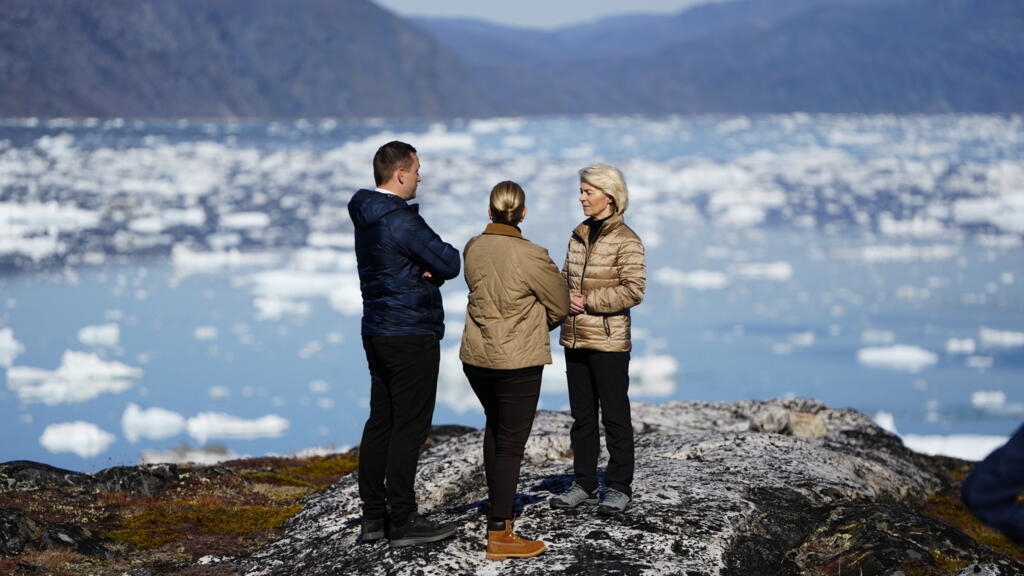
The controversy coincided with European Commission President Ursula von der Leyen’s visit to Greenland, where the European Union announced approximately €200 million, or about $233 million, in investment, highlighting Europe’s efforts to strengthen its relationship with the territory.
Iceland Reassesses Its Security Relationships
The dispute comes less than two weeks after Icelanders rejected a proposal to reopen negotiations on European Union membership.
In the August 29 referendum, 52.8 percent voted against reopening accession talks and 47.2 percent voted in favor, with turnout reaching 82.5 percent. The government had presented closer European integration partly as a potential response to increasing geopolitical uncertainty and competition in the Arctic.
Following the vote, Gunnarsdóttir said Iceland would explore additional security partnerships, including deeper cooperation with European countries and partners including Norway, Finland, Canada and Japan.
Iceland remains a founding member of NATO but has no standing military. Its national security architecture has long relied heavily on NATO and a bilateral defense agreement with the United States dating to 1951.
That makes the latest dispute significant beyond the imagery itself, because U.S. Iceland relations sit at the centre of the country’s security planning. Iceland is not moving away from its U.S. alliance, and its government continues to identify NATO and its defense relationship with Washington as central to national security. But Reykjavik is simultaneously examining how a small Arctic state can broaden its partnerships as competition over the region increases.
The episode underscores a wider challenge facing governments across the North Atlantic: managing long-standing security relationships with Washington while responding to growing questions over sovereignty, Arctic strategy and the future shape of transatlantic cooperation.
 Follow SDG News on LinkedIn