A new milestone in nature finance is reshaping how governments, investors, and conservation leaders think about restoring ecosystems.
Finance Earth has announced a £64.6 million first close (~$87 million USD) for the Big Nature Impact Fund (BNIF), surpassing its initial £50 million target (~$67 million USD) and creating one of the most significant vehicles dedicated to nature restoration in England. The fund aims to support large-scale woodland creation, peatland restoration, and biodiversity enhancement projects while generating financial returns through carbon credits and biodiversity markets.
The achievement is notable not only for its size, but for what it represents: a growing recognition among institutional investors that nature is not merely something to protect—it is critical infrastructure that underpins economic resilience, climate stability, food security, and long-term prosperity.
A New Model for Financing Nature
The Big Nature Impact Fund is being described as the United Kingdom’s first blended “nature-as-infrastructure” fund. Backed by a £30 million cornerstone commitment (~$40 million USD) from the UK Department for Environment, Food and Rural Affairs (Defra), the fund combines public capital with investments from major institutions including Zurich Insurance Group, Admiral Group, the Church of England’s Social Impact Investment Programme, and the Esmée Fairbairn Foundation.
One of the fund’s most innovative features is its first-loss structure. Under the arrangement, the UK government absorbs the initial tranche of potential losses, helping reduce risk for private investors and encouraging greater institutional participation in nature restoration projects. Finance Earth has described this as a pioneering model within UK nature markets.
The approach reflects a broader trend emerging worldwide: governments increasingly using public capital strategically to unlock significantly larger flows of private investment.
Nature’s Funding Gap
The launch comes amid growing concern about the financing gap facing global biodiversity and ecosystem restoration efforts.
The United Kingdom is widely recognized as one of the world’s most nature-depleted countries, with degraded ecosystems affecting biodiversity, water quality, flood resilience, and climate mitigation capacity. Restoring these natural systems requires investment far beyond what governments and philanthropy can provide alone.
The Big Nature Impact Fund seeks to address this challenge by creating a mechanism capable of attracting long-term institutional capital into restoration projects that can generate measurable environmental outcomes and economic returns. Revenue is expected to come primarily from the sale of high-integrity carbon credits and biodiversity units purchased by corporations, real estate developers, and other buyers seeking to meet climate and nature commitments.
From ESG to Nature Capital
The fund’s first close may also signal a broader evolution in sustainable finance.
While ESG investing has faced political and regulatory headwinds in some markets, investment strategies linked to tangible environmental assets—such as forests, wetlands, peatlands, and biodiversity projects—continue to attract growing interest from investors seeking both impact and returns.
Finance Earth has already identified more than £100 million worth of potential projects (~$135 million USD), and the fund ultimately aims to raise between £90 million and £120 million (~$121 million–$162 million USD). Future funds focused on Scotland, Wales, and Northern Ireland are also being considered.
For institutional investors, nature is increasingly being viewed through the same lens as energy, transportation, or digital infrastructure: a foundational asset that delivers essential services upon which economies depend.
Why It Matters
The significance of the Big Nature Impact Fund extends beyond England.
Around the world, governments are searching for ways to finance the commitments made under the Kunming-Montreal Global Biodiversity Framework and the Sustainable Development Goals. Public budgets alone are insufficient to meet these ambitions. Mobilizing private capital at scale has become one of the defining challenges of the decade.
The success of BNIF’s first close demonstrates that investors are increasingly willing to back high-integrity nature projects when credible policy frameworks, measurable outcomes, and appropriate risk-sharing mechanisms are in place.
For policymakers, the lesson may be equally important: when governments help de-risk investments and create clear environmental markets, private capital can become a powerful force for restoring ecosystems.
As nations prepare for major biodiversity and climate negotiations in the years ahead, the UK’s experiment offers a glimpse into what the future of nature finance may look like—one where forests, wetlands, peatlands, and biodiversity are increasingly recognized not simply as environmental assets, but as essential infrastructure worthy of investment.
Looking Ahead: Nature Summit at UNGA
The growing momentum behind nature finance will continue this September at the 2026 Nature Summit at UNGA, chaired by Prime Minister Lord Fatafehi Fakafānua of the Kingdom of Tonga.
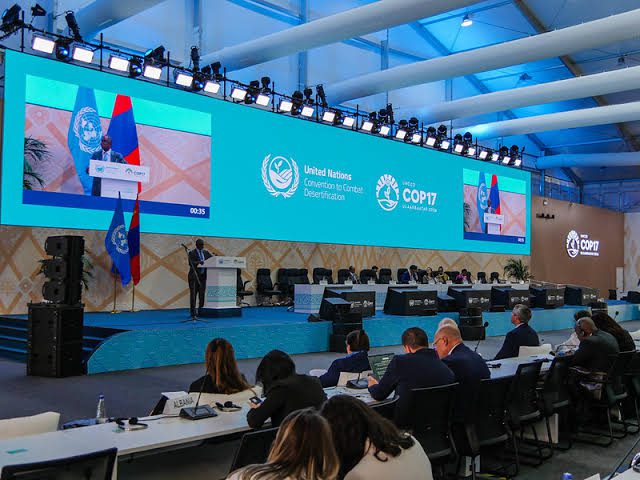
The Summit is the latest in a series of high-level forums that launched last year alongside the UNFCCC, CBD, and UNCCD negotiations in Panama, bringing together leaders from government, finance, business, philanthropy, and civil society to accelerate investment in the nature-based economy.
Organized by Global Resilience Partners and supported by SDG News as Official Media Partner, the 2026 Nature Summit at UNGA aims to help transform nature from an underfunded environmental priority into a recognized asset class capable of attracting the capital and partnerships needed to achieve resilience, prosperity, and the Sustainable Development Goals.
Learn More Here: Nature Summit – 81st Session of UN General Assembly
RELATED STORIES:
- Nature Summit Day Two: Indigenous Leadership at the Heart of the Nature-Based Economy
- Panama Unites the World’s Environmental Conventions with the Nature Summit Series
- Lord Fatafehi Fakafānua: A Tongan Statesman Shaping the Future of Global Leadership
- Panama Unites the World’s Environmental Conventions with the Nature Summit Series
 Follow SDG News on LinkedIn