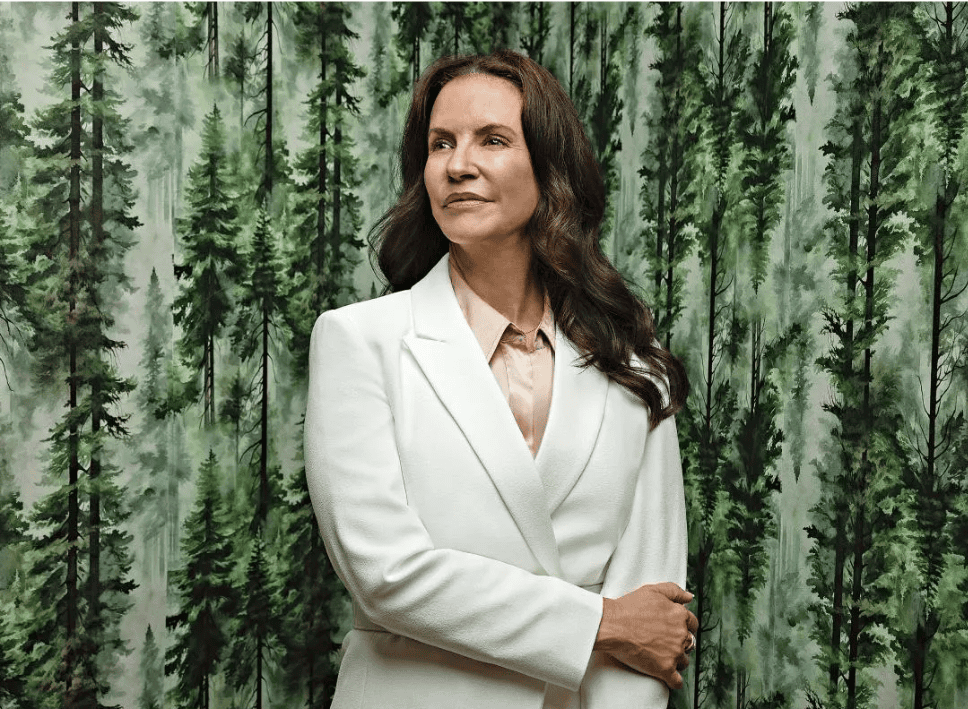
As development budgets tighten and climate-vulnerable countries face rising costs, Mafalda Duarte is pursuing reforms intended to put billions more to work without waiting for new donor commitments.
At a moment of mounting pressure on global climate finance, Mafalda Duarte is trying to show that multilateral institutions can expand their impact not only by raising more money, but by using existing capital more effectively.
The Green Climate Fund announced last week that changes to its financial-risk and balance-sheet management are expected to make approximately $5.65 billion available for new projects and programmes—an increase of more than $4 billion from the capacity available under its previous approach.
The estimate comes from the fund itself and will ultimately be tested by how much additional financing is approved, disbursed and translated into measurable results. But the announcement offers a timely illustration of the approach Duarte has brought to the world’s largest dedicated multilateral climate fund: reform its internal machinery, accelerate the movement of capital and make limited public resources stretch further.
It also comes at a difficult moment. Governments are balancing climate commitments against security demands, debt pressures and competing domestic priorities, even as developing countries confront intensifying floods, droughts, extreme heat and other climate-related disruptions.
Against that backdrop, Duarte’s mandate is becoming both more urgent and more complex.
Reworking the Architecture of Climate Finance
Duarte took office as executive director of the Green Climate Fund in August 2023. She inherited an institution central to international climate finance, but also one facing familiar criticism: access could be cumbersome, approval processes lengthy and capital slow to reach projects on the ground.
Soon after taking office, Mafalda Duarte introduced a “50 by 30” reform vision intended to enable the fund to efficiently manage $50 billion by 2030.
The plan calls for faster project reviews, stronger private-sector participation, changes to the fund’s accreditation and partnership model, greater support for vulnerable communities and more emphasis on large, system-transforming programmes rather than isolated projects.
The distinction between managing and investing $50 billion is important. The target describes the scale of capital the institution aims to oversee effectively by the end of the decade; it does not mean the entire amount will necessarily be invested or disbursed by that date.
The latest balance-sheet reforms address another constraint within multilateral finance. Institutions maintain financial buffers to manage risk and ensure they can meet their obligations. But conservative assumptions can also leave capital undeployed even when demand for investment is high.
By adopting a more risk-based approach, the Green Climate Fund says it can increase the resources available for new investments without weakening its financial resilience.
The practical test will be whether that additional capacity produces projects that reach communities faster, deliver measurable results and remain aligned with developing countries’ priorities.
A Career Built Around Development Finance
Born in Portugal, Mafalda Duarte began her international development career in the government of Mozambique before holding senior positions at the African Development Bank and the World Bank. She has worked extensively across developing countries, designing and implementing programmes focused on low-emission and climate-resilient development.
Before joining the Green Climate Fund, Duarte spent nearly a decade leading the Climate Investment Funds. Her work there included financing for renewable energy, energy storage, industrial decarbonization, nature-based solutions and transitions away from carbon-intensive economic activity.
That experience helped shape her support for using concessional public finance to reduce risk and draw larger pools of investment into countries and sectors that commercial investors might otherwise avoid.
The model is straightforward in principle: public institutions can provide grants, guarantees, low-cost loans or equity that make projects financially viable and encourage development banks and private investors to contribute additional capital.
In practice, the challenge is more complicated.
Private investment tends to flow toward projects with identifiable revenues and predictable returns. Many essential adaptation investments—including flood protection, drought resilience, early-warning systems and community agriculture—do not fit that model easily.
Mafalda Duarte must therefore navigate two objectives that do not always align: mobilizing more private capital while preserving the fund’s responsibility to support countries and communities that may never attract sufficient commercial investment.
The Developing-Country Imperative
A central premise of Duarte’s agenda is that global climate objectives cannot be met without a major expansion of investment across developing and emerging economies.
These countries will account for much of the world’s future population growth, energy demand, urban development and infrastructure construction. Yet many face borrowing costs substantially higher than those in wealthier economies, making clean energy and climate-resilient infrastructure more expensive to finance.
The Green Climate Fund now oversees more than $20 billion across more than 350 projects in over 130 countries, according to recent fund materials. Its network extends across 134 countries through more than 150 accredited partner agencies.
Those figures make the institution consequential, but they remain modest in relation to the scale of developing-country needs.
Public climate funds cannot close the financing gap alone. Their potential influence lies in using limited public resources to make other investments possible, while continuing to finance adaptation and resilience measures for which private capital may be unavailable.
Moving Faster Without Lowering Standards
Speed is another defining element of Duarte’s reform programme.
The fund’s “Efficient GCF” initiative is re-examining project review and approval processes, simplifying documentation, assigning a single lead throughout project appraisal and prioritizing investments aligned with country ownership and climate impact.
The reforms respond to a broader problem across the climate-finance system. A review welcomed by the Group of 20 found fragmented accreditation requirements, slow approvals and a substantial gap between the amounts climate funds commit and the amounts they disburse. The review recommended streamlined procedures, shorter approval times and greater coordination among funds.
But faster financing also presents risks.
Climate projects can involve complex questions surrounding land rights, environmental protections, Indigenous communities and long-term public liabilities. Accelerating approval cannot mean weakening due diligence, safeguards or accountability.
Duarte’s tenure will therefore be assessed not only by how much financing the fund approves, but by how effectively projects are implemented and whether intended beneficiaries see tangible results.
Leadership in an Era of Scarcity
The fund’s projected increase in investment capacity arrives as climate finance is being asked to prove that it can deliver broader economic and social value.
Governments increasingly want investments to demonstrate that they can strengthen infrastructure, support employment, reduce vulnerability, improve energy security and mobilize additional capital—not operate as a separate environmental programme.
Duarte’s response has been to emphasize efficiency, scale and delivery.
The balance-sheet changes do not close the enormous gap between available capital and developing-country needs. Nor can institutional reform substitute for future financial commitments from governments.
But the announcement shows how changes within a multilateral institution can create additional room for action under constrained circumstances.
For Mafalda Duarte, the next challenge is turning that expanded capacity into visible results—and demonstrating that the world’s largest dedicated climate fund can become not only larger, but faster, more accessible and more effective.
RELATED STORIES:
 Follow SDG News on LinkedIn