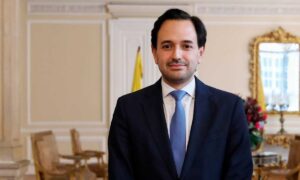
Dilma Rousseff now leads a development bank that has approved nearly $43 billion across 139 projects — and is pushing to expand its role in financing infrastructure, climate action and development across the Global South.
More than a decade after helping establish the New Development Bank (NDB) as president of Brazil, Rousseff is now shaping its next phase, with a mandate extending through 2030 and an agenda centered on greater local-currency financing, an expanding membership and increased investment in climate, technology and infrastructure.
As president of the Shanghai-based NDB, Rousseff leads a multilateral development bank established by Brazil, Russia, India, China and South Africa to finance infrastructure and sustainable development in emerging markets and developing countries.
From Brasília to Shanghai
An economist by training, Dilma Rousseff served as Brazil’s minister of mines and energy and later chief of staff under President Luiz Inácio Lula da Silva before becoming the country’s first female president in 2011. She won reelection in 2014 but was removed from office following impeachment proceedings in 2016.
Her connection to the NDB, however, began while she was still in office.
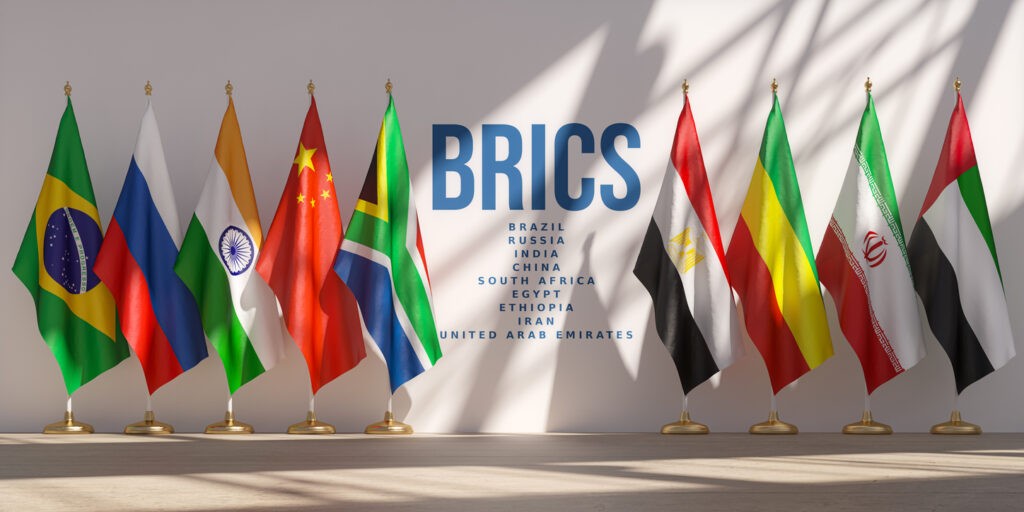
In 2014, Rousseff joined the other BRICS leaders in establishing the New Development Bank and the Contingent Reserve Arrangement. Nearly nine years later, in March 2023, the NDB’s governors unanimously elected her to lead the institution she had helped create.
She now oversees a bank that is considerably broader than the five-country institution established in 2014.
A Growing Development Finance Platform
The NDB remains substantially smaller than institutions such as the World Bank, but its footprint is expanding.
By the end of 2025, the bank had approved $42.9 billion in financing across 139 projects, spanning areas including clean energy, transportation, water and sanitation, environmental protection, and social and digital infrastructure.
Its membership has expanded as well. Bangladesh, the United Arab Emirates, Egypt and Algeria have joined the bank, while additional countries have pursued membership as the broader BRICS grouping has grown.
Indonesia announced in March 2025 that it would join the NDB, with President Prabowo Subianto identifying potential cooperation in renewable energy, biodiesel and technological development.
The NDB presents itself as a complementary source of development finance rather than a replacement for established multilateral lenders. Its expansion comes as developing economies face large infrastructure and climate-finance requirements while seeking a broader range of financing partners.
One area where Dilma Rousseff has sought to differentiate the bank is how that financing is delivered.
A Push for Local-Currency Finance
Expanding the use of local currencies has become one of Rousseff’s most prominent priorities.
The NDB’s 2022–2026 strategy set a target for 30% of its financing to be denominated in member-country currencies. In 2024, local-currency financing represented 43.5% of annual approvals, primarily through the Chinese renminbi and South African rand.
Dilma Rousseff has argued that local-currency lending can reduce borrowers’ exposure to foreign-exchange volatility while helping develop domestic capital markets.
She has also emphasized that the NDB does not seek to attach public-policy conditionalities to its financing, presenting that approach as an important feature of the institution’s development model.
Together, those priorities reflect a broader objective: expanding the financing options available to developing economies while reducing some of the risks associated with foreign-currency borrowing.
But Rousseff’s ambitions for the NDB increasingly extend beyond its financing structure.
Climate, Technology and the Bank’s Next Phase
Infrastructure remains at the center of the NDB’s mandate, while climate investment and technology are becoming increasingly prominent.
Climate finance represented 55.3% of the bank’s financing approvals in 2024, exceeding its strategic target of directing 40% of financing toward projects contributing to climate mitigation and adaptation.
At the bank’s 2026 Annual Meeting, Dilma Rousseff outlined a vision for its next strategy in which the NDB becomes “larger, greener, more digital, more innovative, more agile, and more cooperative.”
Her agenda includes expanding local-currency financing, deepening engagement with newer members, supporting digital infrastructure and technological innovation, and financing the energy transition and advanced low-carbon technologies. She has also called for greater use of instruments including guarantees, trade finance and risk-sharing mechanisms.
The priorities reflect several pressures confronting development finance simultaneously: large infrastructure requirements across emerging economies, growing climate-investment needs, rapid technological transformation and calls from developing countries for greater representation within the international financial system.
Expanding the NDB’s role, however, also brings greater financial and geopolitical complexity.
The Test Ahead
The bank must maintain strong credit quality while increasing lending, mobilize capital at competitive rates and demonstrate measurable development outcomes. At the same time, it operates across a membership encompassing countries with substantially different political systems, economic interests and relationships with the United States and Europe.
Russia has already demonstrated how those geopolitical tensions can affect the institution.
Following Russia’s invasion of Ukraine in 2022, the NDB announced that it had put new transactions in Russia on hold, citing unfolding uncertainties and restrictions. The decision illustrated the constraints facing an institution seeking to broaden financing options for emerging economies while remaining connected to international capital markets.
The NDB’s expansion therefore presents both an opportunity and a test: whether a larger and more diverse institution can increase its development impact while maintaining financial discipline and operating effectively across geopolitical divides.
Rousseff’s Second Act
For Dilma Rousseff, leading that effort represents a significant second phase of her international career.
A decade after the political crisis that ended her presidency, she is no longer primarily shaping the economic policy of one country. She is overseeing an institution seeking a larger role for emerging economies within international development finance.
The NDB remains modest in scale compared with the world’s largest multilateral development banks. Its expansion nonetheless warrants attention as developing countries seek additional sources of long-term capital for infrastructure, climate resilience, energy systems and technological development.
The broader debate is no longer only about how much development capital is available. It is also about who provides it, in what currencies, under what conditions — and how emerging economies participate in the institutions deciding where it goes.
Dilma Rousseff now has until 2030 to help define the New Development Bank’s answer.
RELATED STORIES:
- Diego Mesa Puyo Named GEF Chief as $3.9 Billion Environmental Funding Cycle Begins
- Christina Markus Lassen: The Danish Diplomat Giving Principle a Stronger Voice at the United Nations
- Winnie Byanyima Is Fighting to Keep the End of AIDS Within Reach
- Volker Türk — Defending Human Rights in an Era of Global Division
 Follow SDG News on LinkedIn