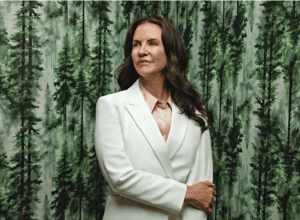
Novo Nordisk Foundation’s Lene Oddershede places quantum within a mission-driven strategy for planetary health, while 55 North’s Owen Lozman and U.S. Ambassador Kenneth Howery examine what it will take to build lasting quantum value.
COPENHAGEN — Q2B Copenhagen opened Wednesday with a question increasingly defining the global quantum industry: how can scientific breakthroughs be translated into commercially viable companies, strategic capabilities and meaningful societal value?
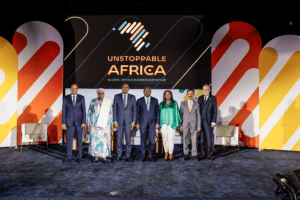
Q2B Copenhagen, held September 9-10 at Øksnehallen, is bringing together more than 600 participants and 80 speakers across quantum computing, artificial intelligence, error correction, communications and security, sensing and other emerging applications.
One of the opening day’s most consequential presentations came from Lene Oddershede, Chief Scientific Officer for Planetary Science and Technology at the Novo Nordisk Foundation, who made the case for building a mission-driven quantum ecosystem capable of connecting fundamental science with commercial development and societal impact.
The institutional weight behind that message is significant.
The Novo Nordisk Foundation is one of the world’s largest philanthropic enterprise foundations, with the financial capacity to make investments on a scale rarely seen in global philanthropy. Its decision to prioritize quantum within its broader Planetary Science and Technology mandate reflects growing conviction that the technology could become an important tool for advancing human and planetary health.
Oddershede’s portfolio spans quantum, artificial intelligence, natural and technical sciences, agriculture, food and innovation. Her keynote positioned quantum not simply as a computing industry, but as an enabling capability with potential applications across health, materials, energy, climate and scientific discovery.
The Foundation has already committed substantial resources to that vision through initiatives including the Novo Nordisk Foundation Quantum Computing Programme, Quantum Foundry Copenhagen and QuNorth, creating an ecosystem that spans fundamental research, infrastructure, talent development and commercialization.
The significance of that approach goes beyond the amount of capital involved. When one of the world’s largest foundations makes quantum a central component of a mandate focused on people and the planet, it provides powerful institutional validation for a field still navigating the transition from scientific promise to broad application.
From Mission-Driven Capital to Venture Capital
That transition provided a natural bridge to another of the opening day’s standout sessions.
The Novo Nordisk Foundation’s involvement in quantum does not stop at research and infrastructure. Its wholly owned investment company, Novo Holdings, is also deploying capital into the commercial quantum ecosystem.
Novo Holdings, alongside Denmark’s Export and Investment Fund EIFO, is a cornerstone investor in 55 North, the Copenhagen-based fund led by Dr. Owen Lozman. With a targeted fund size of approximately $343 million, 55 North has been described by Novo Holdings as the world’s largest pure-play quantum venture capital fund.
That connection gave the morning’s programming a clear progression.
Oddershede articulated why a major mission-driven institution is prioritizing quantum. The subsequent fireside featuring Lozman examined the next question: what will it take to translate that scientific ambition into economic and strategic value?
What Will It Take to Build Quantum Value?
That was the explicit focus of “What will it take to build Quantum Value,” a fireside conversation between Dr. Owen Lozman, Managing Partner of 55 North, and Kenneth A. Howery, U.S. Ambassador to Denmark.
The pairing brought together perspectives that increasingly define the quantum sector: frontier technology investment, entrepreneurship and government strategy.
Lozman represented the specialized capital required to identify and finance quantum companies through long development cycles, helping bridge the gap between advanced research and scalable businesses.
Howery brought an unusually broad vantage point to the conversation.
Before entering diplomacy, he co-founded PayPal, serving as its first chief financial officer, and later co-founded Founders Fund, giving him firsthand experience both building and financing technology companies. His subsequent career in public service added a third perspective at a moment when quantum is increasingly being treated not only as an investment opportunity, but as a matter of national competitiveness and strategic policy.
That combination of entrepreneur, venture capitalist and diplomat made Howery particularly well positioned to examine the challenges facing quantum.
Entrepreneurs must determine how advanced science becomes a viable product. Investors must assess where durable value can emerge despite long timelines and substantial technical risk. Governments increasingly view quantum through the lenses of economic competitiveness, technological sovereignty, supply chains and national security.
The fireside reinforced one of the clearest themes emerging from Q2B’s opening day: developing quantum technology is only the beginning. Building quantum value requires an ecosystem around it.
From Scientific Leadership to Ecosystem Leadership
That same idea sat at the heart of Oddershede’s keynote.
Scientific excellence alone does not guarantee that a country or region will capture the economic and societal benefits of the technologies it develops. Doing so also requires patient capital, specialized talent, manufacturing capacity, advanced infrastructure, commercialization pathways and coordination among research institutions, investors, industry and government.
Denmark is increasingly assembling those pieces.
The relationship between the Novo Nordisk Foundation, Novo Holdings and 55 North offers a particularly visible example of how that architecture can work. Mission-driven philanthropic capital supports research, talent and infrastructure. Institutional investment capital helps build the commercial ecosystem around those advances. Specialized venture funds then identify and scale companies capable of taking quantum technologies into global markets.
Government and diplomacy add another layer by shaping international partnerships, investment conditions and the strategic environment in which those technologies develop.
The quantum race is no longer solely about who produces the next scientific breakthrough. It is increasingly about who can assemble the full stack of research, infrastructure, patient capital, venture investment, industry and government partnership required to turn those breakthroughs into enduring quantum value.
And Copenhagen is making a compelling case that the Nordic region intends to be one of those places.
 Follow SDG News on LinkedIn