Days after the World Bank dropped its 45% climate finance target under U.S. pressure, the immediate fight over the benchmark is over. The bigger question now is whether climate resilience remains central to development finance, or becomes politically negotiable.
The World Bank’s decision this week to scrap its 45% climate finance target marked a clear victory for the Trump administration. But as the news settles, the more important question is no longer whether the world’s largest development lender will keep a headline benchmark. It is what happens next.
The Bank announced on Monday that it would retire its goal of directing 45% of annual financing toward projects with climate co-benefits, along with an earlier 35% target, while extending the rest of its Climate Change Action Plan. The World Bank framed the decision as a shift from “inputs to outcomes,” arguing that future progress will be driven by client demand, country priorities, and measurable development impact.
Yet the political context was unmistakable. The United States, the Bank’s largest shareholder, had pushed for the target to be abandoned, arguing that it distorted the institution’s core mission of poverty reduction and economic growth. Reuters reported that the U.S., along with Russia, Kuwait, and Saudi Arabia, declined to support continued climate finance targets, while France and other shareholders pushed to preserve them.
That makes this more than a technical adjustment to the Bank’s internal scorecard. It is a test of whether climate finance remains embedded in mainstream development lending, or becomes more flexible, more contested, and more exposed to shareholder politics.
For developing economies, the timing is consequential. Countries already facing extreme heat, floods, droughts, food insecurity, infrastructure damage, and rising debt costs are also being asked to build cleaner energy systems, resilient cities, climate-smart agriculture, and stronger disaster preparedness. For many of them, World Bank financing is not only a source of capital. It is a signal to markets, donors, and other multilateral lenders about what the future of development finance is supposed to prioritize.
A retreat from a clear signal
The 45% target had become one of the clearest benchmarks for aligning development finance with climate realities. The World Bank exceeded the target last year, with 48% of its financing classified as having climate co-benefits, according to reporting on the decision.
Supporters of the benchmark argued that it helped mainstream climate across the Bank’s broader development portfolio, rather than isolating it as a niche environmental concern. Clean energy access, water security, resilient food systems, disaster preparedness, and climate-resilient infrastructure are increasingly central to poverty reduction and economic stability.
Critics of the decision warn that removing the target weakens accountability. Without a quantified benchmark, climate finance may become harder to track, harder to defend, and more vulnerable to political pressure from major shareholders.
The World Resources Institute said the Bank’s board had dropped a key climate finance goal even as it extended the broader Climate Change Action Plan and agreed to review it. The concern among climate finance advocates is that a review process intended to improve outcomes could also become a mechanism for reducing ambition.
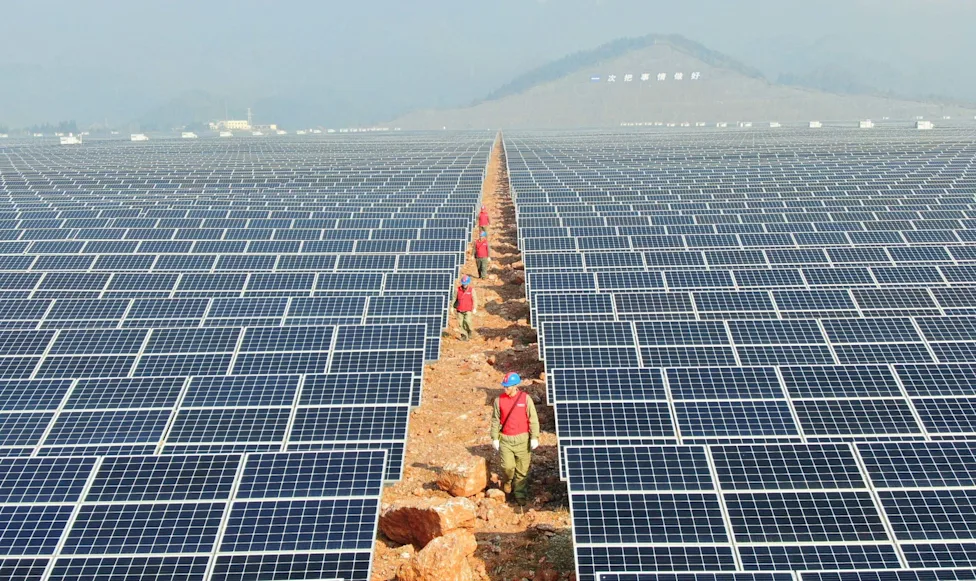
That does not mean World Bank climate finance will disappear. Countries will still seek support for clean energy, adaptation, disaster preparedness, water security, food systems, and resilient infrastructure. The Bank will still finance projects with climate benefits. This week, it approved $265 million for a pumped hydropower storage project in Morocco, underscoring that clean energy investments will continue even after the target’s removal.
But the symbolism matters. At a moment when developing countries are calling for more predictable, concessional, and catalytic finance, the removal of a headline target risks sending the opposite signal: that climate ambition inside the world’s leading development institution is now negotiable.
The U.S. reshapes the debate
The decision reflects the Trump administration’s broader effort to redefine the role of multilateral development banks. U.S. officials have argued that the World Bank should refocus on core development, growth, and financial stability rather than climate-specific lending targets. The Bank’s announcement gives that argument institutional weight.
That framing has created a direct clash over whether climate action is separate from development, or inseparable from it.
For climate-vulnerable countries, the distinction is increasingly difficult to sustain. Rising seas, stronger storms, crop failures, heat stress, water scarcity, and climate-driven displacement are already undermining development gains. Adaptation finance, in particular, remains one of the most urgent and underfunded areas of the global finance agenda.
The Bank’s defenders argue that dropping a percentage target does not necessarily mean dropping climate work. They say the institution can produce stronger outcomes by responding to country priorities rather than chasing internal lending ratios. That argument will now be tested in practice.
The question is whether the shift from inputs to outcomes produces better development results, or simply gives the Bank more political room to lower climate ambition without appearing to do so.
Now comes the real test
Because this decision happened Monday, the immediate news cycle has already moved on. But the real story is only beginning.
The next phase will be measured less by institutional language than by capital flows.
- Will adaptation finance continue to rise for frontline countries?
- Will clean energy and resilience projects remain central to country strategies?
- Will the Bank keep helping countries prepare ports, grids, farms, cities, schools, hospitals, and water systems for a more volatile climate?
- Will private investors still view the World Bank as a consistent signal-setter for climate-aligned infrastructure?
Or will other shareholders, lenders, and development banks begin to soften their own targets under similar political pressure?
That is the deeper significance of the World Bank’s retreat. A target is not the same as impact. But targets shape expectations. They tell borrowing countries, investors, donors, and other institutions where capital is supposed to move. Removing one of the most visible climate finance benchmarks creates uncertainty at precisely the moment when countries need more clarity.
For vulnerable countries, the stakes are practical, not ideological. Climate shocks are becoming more expensive, more frequent, and more destabilizing. If climate finance becomes less predictable, the burden will not fall evenly. It will fall hardest on countries with the least fiscal space and the greatest exposure.
That is why the World Bank now faces a credibility test. Its leaders say the institution is moving beyond inputs and toward outcomes. That promise will only hold if the Bank can show that removing the target leads to stronger resilience, better infrastructure, expanded energy access, and more effective support for countries on the frontlines.
The coming months will reveal whether Monday’s decision gives countries more flexibility—or opens the door to a slower, quieter retreat from climate-aligned development finance.
For the multilateral system, the stakes are clear. Climate finance is no longer only about emissions. It is about whether development itself can remain viable in a hotter, more volatile, and more unequal world.
RELATED STORIES:
 Follow SDG News on LinkedIn