SDG News Defense Brief | August 18, 2026
President Donald Trump’s abrupt order to substantially scale back joint military exercises with South Korea is moving toward implementation, raising new questions over readiness and deterrence as North Korea expands its military capabilities and deepens ties with Russia.
U.S. Forces Korea Commander Gen. Xavier Brunson visited South Korea’s Defense Ministry Tuesday to discuss plans to reduce the annual Ulchi Freedom Shield exercises, while the Pentagon has said it is working to implement Trump’s directive.
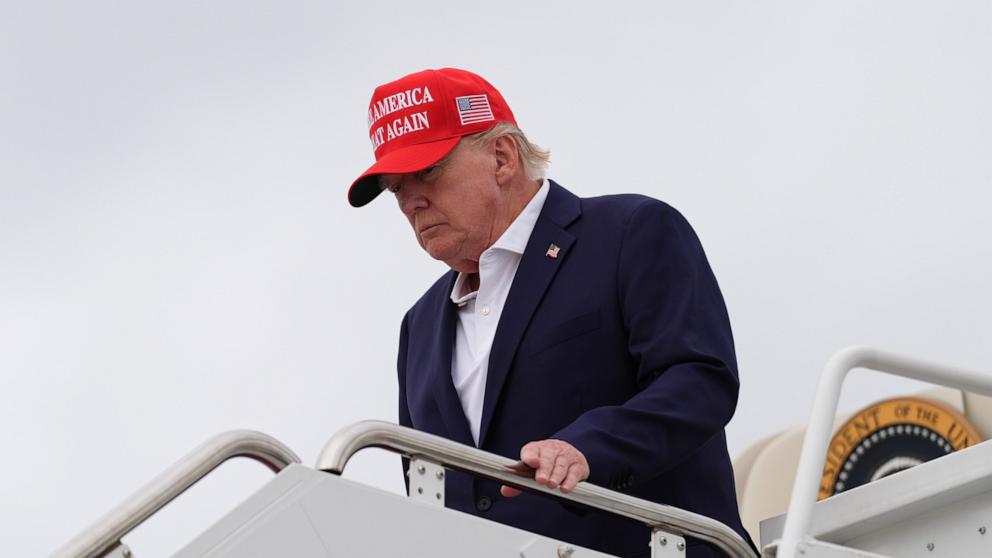
Trump issued the order just hours before the exercises began Monday, describing them as costly and an unnecessarily hostile signal toward North Korea while emphasizing his relationship with North Korean leader Kim Jong Un.
The drills are scheduled to continue through August 27 and involve about 18,000 South Korean military personnel alongside U.S. forces. The extent of the reduction, and which exercises, personnel or capabilities will ultimately be affected, remains unclear.
The diplomatic picture is shifting as well. Trump said Monday that Kim had responded to his recent outreach, although he offered no details about the response or whether formal talks are under consideration.
Seoul Reassures: While Preparing for Greater Self-Reliance
South Korean President Lee Jae Myung has emphasized both the importance of the U.S. alliance and the need for stronger South Korean defense capabilities.
Lee has renewed his push for South Korea to regain wartime operational control of its military and urged faster progress toward acquiring nuclear-powered submarines. He has also stressed that civil-defense exercises conducted alongside the military drills are defensive and not intended to threaten North Korea.
Seoul is simultaneously leaving the door open to diplomacy, hoping Trump’s relationship with Kim can facilitate renewed U.S.-North Korea engagement.
For South Korea, the challenge is increasingly two-sided: preserve credible deterrence while preparing to assume greater responsibility for its own defense.
A Familiar Strategy Meets a Stronger North Korea
Trump has long questioned the cost and strategic value of large U.S.-South Korean exercises.
Following his 2018 summit with Kim in Singapore, Trump suspended major drills. His subsequent meetings with Kim produced unprecedented leader-level engagement but no agreement constraining North Korea’s nuclear or ballistic-missile programs. Large-scale exercises were eventually restored.
Trump has not explicitly said his latest decision is intended to restart diplomacy. But Kim’s reported response to his outreach adds a new variable.
Any negotiations would also take place against a significantly different security backdrop.
North Korea has expanded its nuclear and missile capabilities while developing a much deeper military relationship with Moscow. North Korean forces have deployed to support Russia’s war against Ukraine, while Pyongyang has supplied Russia with artillery ammunition, ballistic missiles and other weapons.
The Ukraine war has also given North Korean forces exposure to contemporary combat involving drones and electronic warfare, capabilities increasingly relevant to planning on the Korean Peninsula.
The result is a more complicated deterrence environment than Trump faced during his first-term diplomacy with Kim.
The Alliance Debate Is Expanding Beyond North Korea
The exercise dispute is unfolding within a broader reassessment of the U.S.-South Korea security relationship.
Trump has repeatedly questioned the cost of maintaining approximately 28,500 U.S. troops in South Korea, despite an existing burden-sharing agreement extending through 2030.
Washington has also sought to “modernize” the alliance, potentially giving U.S. forces stationed on the peninsula greater flexibility to respond to contingencies beyond North Korea, including scenarios involving China and Taiwan. Seoul has approached that prospect cautiously.
Economic tensions add another layer. South Korea has pledged substantial investment in the United States, including a $350 billion investment package, while the two governments continue navigating disagreements over trade, tariffs and implementation of those commitments.
Trump further linked disparate alliance issues when announcing the exercise reduction, citing Seoul’s refusal to participate in U.S. actions concerning Iran alongside his criticism of the drills.
That does not mean Washington is formally conditioning its security commitments on unrelated disputes, but it underscores how defense, trade and wider foreign-policy priorities are increasingly intersecting.
Beijing Reenters the Equation
The shifting security environment comes as Chinese Foreign Minister Wang Yi prepares to visit South Korea from August 19 to 20, his first official trip to the country in five years.
Wang is scheduled to meet President Lee, National Security Adviser Wi Sung-lac and Foreign Minister Cho Hyun, with discussions expected to include bilateral relations, developments on the Korean Peninsula and wider regional issues.
The visit was not prompted by Trump’s exercise decision, but its timing adds another diplomatic dimension. Seoul is simultaneously managing Washington’s evolving approach to the alliance, the possibility of renewed U.S.-North Korea engagement, Pyongyang’s growing relationship with Moscow and its own effort to stabilize relations with Beijing.
South Korea is increasingly navigating overlapping strategic calculations among the United States, China, Russia and North Korea.
What Defense Officials Should Watch
The operational cuts. The immediate question is which exercises, personnel and capabilities Washington actually reduces. The effect on command integration, readiness and interoperability will matter more than the announcement itself.
Kim’s next move. Trump says Kim has responded to his outreach, but the substance remains undisclosed. Confirmation of direct talks, changes in missile activity or other shifts in North Korean military signaling would offer clearer evidence that diplomatic engagement is advancing.
South Korea’s defense trajectory. Seoul’s push for greater military autonomy — including wartime command transfer and nuclear-powered submarines — could become more consequential if uncertainty around U.S. force posture persists.
The future mission of U.S. Forces Korea. A broader Indo-Pacific role could gradually transform an alliance historically centered on deterring North Korea, particularly as U.S.-China competition intensifies.
The Russia-China dimension. North Korea’s expanding military relationship with Moscow and Wang Yi’s visit to Seoul underscore how Korean Peninsula security is becoming increasingly intertwined with wider great-power competition.
Strategic Outlook
Trump’s intervention is becoming a test not only of diplomacy with Kim Jong Un, but of the future architecture of deterrence in Northeast Asia.
Reducing exercises could lower tensions and create diplomatic space. But combined training remains central to interoperability and readiness against a North Korea whose military capabilities and external partnerships have strengthened since Trump’s first term.
At the same time, South Korea is pursuing greater defense autonomy, Washington is reconsidering the regional role of U.S. forces, Pyongyang is deepening ties with Moscow, and Beijing is reengaging Seoul at senior levels.
For defense officials, the central question is therefore broader than whether Trump’s decision produces another meeting with Kim: whether the U.S.-South Korea alliance can adapt to a more contested regional security environment without weakening the deterrence it was built to provide.
RELATED STORIES:
 Follow SDG News on LinkedIn